Cheap vs. Premium Red Light Therapy Panels: What Are You Actually Paying For?
You open two tabs. Both show a red light therapy panel. Both feature rows of glowing LEDs. Both list wavelengths and promise benefits.
But the prices are very different.
So what are you actually paying for?
That is a fair question. A higher price may reflect meaningful differences in coverage, controls, accessories, and support. It may also reflect marketing, distribution costs, or features you will never use.
When comparing cheap vs. premium red light therapy panels, the goal is to understand what the extra money buys and whether that difference matters to you.
You do not need the most expensive device. You need one you can evaluate clearly, position properly, and use according to its instructions.
Here is how to compare your options and decide what deserves a place in your budget.
First, define what “better” means for you
Before comparing specifications, picture the job you want your device to do.
Are you interested in one small area? Several areas during the same session? A larger portion of your body?
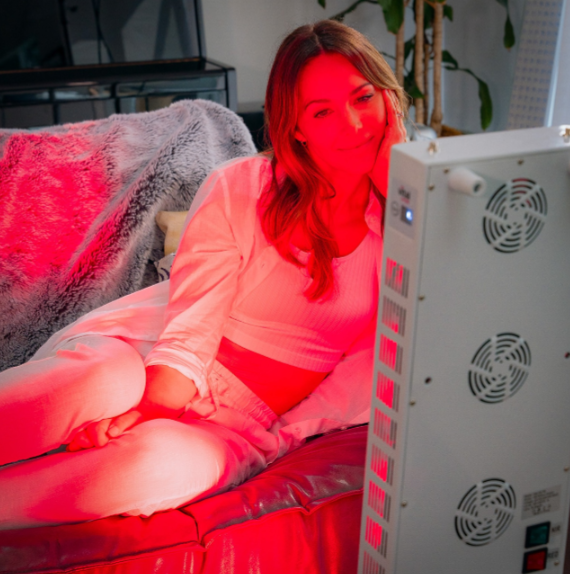
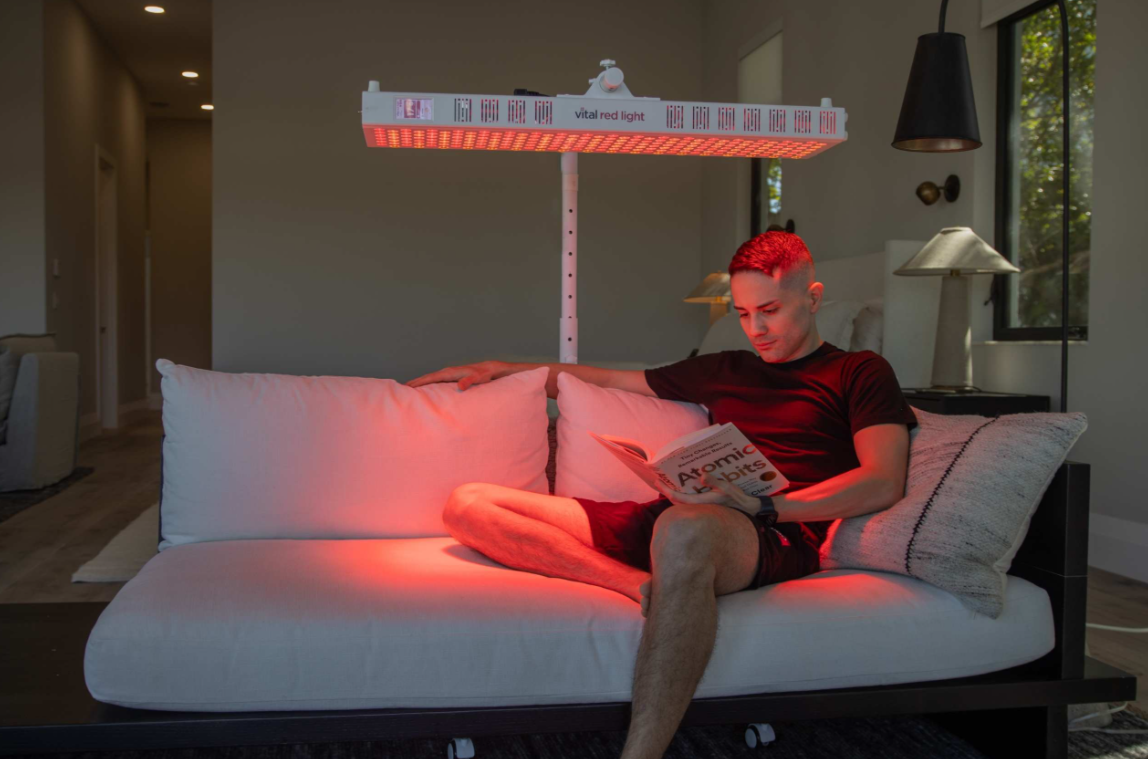
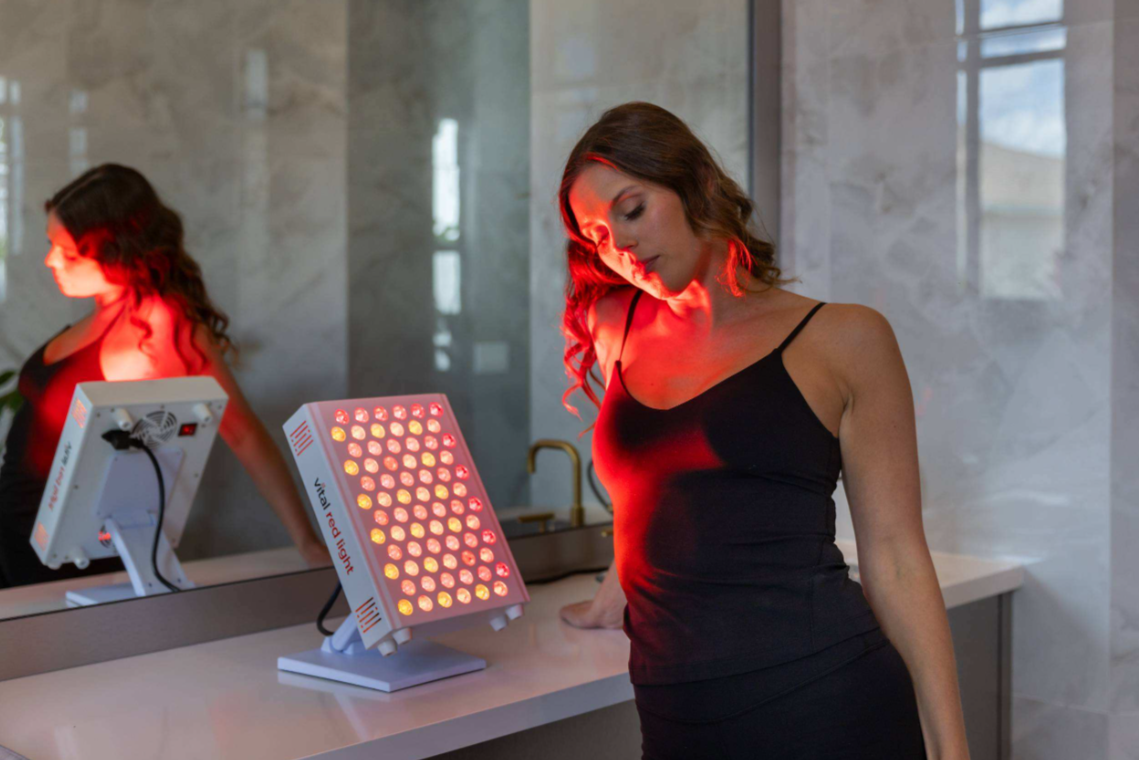
Then consider where it will live. A portable device, tabletop panel, and larger panel with a stand create different routines.
Three questions help narrow the search:
- What area do I want to expose to the light?
- What setup will fit my home and daily routine?
- What is my total budget, including necessary accessories?
A smaller device is not automatically inferior. It may be a better fit for targeted use, limited storage, or portability.
A larger panel may be more practical if you want broader coverage and would otherwise spend your session repeatedly repositioning a smaller device.
Our guide to choosing a device type explains those format differences.
Start with your intended use. Otherwise, you may pay for a larger device simply because it looks more impressive.
The best value starts with the right fit. Paying less for something you will not use is not a bargain. Paying more for coverage you do not need can be an unnecessary expense.

The specifications worth comparing
Product pages can make shopping feel like a contest: more wavelengths, more LEDs, more watts.
Those numbers describe different things. They need context before they can help you decide.
Wavelengths: relevance matters more than the count
Wavelength describes the type of light a device emits, typically expressed in nanometers, or nm.
A wavelength list tells you which parts of the light spectrum are included. It does not, by itself, establish how effective the device will be for a particular goal.
Photobiomodulation research considers wavelength alongside output, exposure time, dose, and other treatment parameters. A review of light parameters highlights substantial variation across studies and the difficulty of identifying universally effective protocols.
For shopping purposes, ask:
Does the brand explain why these wavelengths are included? Can you select different modes? Are the instructions clear about their use?
Additional wavelengths may offer useful options. Their value depends on whether those options serve your intended routine.
A longer wavelength list should come with an explanation you can understand, rather than leaving you to assume that more must be better.
Irradiance: a number needs measurement details
Irradiance describes the light power arriving at a surface per unit area. Product pages often express it in milliwatts per square centimeter, or mW/cm².
That is different from the device’s electrical wattage or the nominal wattage of its LEDs.
To compare irradiance claims, ask for:
- The measurement distance.
- The instrument and method used.
- The operating mode tested.
- Whether the figure represents a single point or an average across an area.
A measurement close to the LEDs is not directly comparable with one taken farther away. A peak reading at the center also does not describe every point in the illuminated area.
Scientific reporting guidance emphasizes documenting beam and dose parameters, including power, exposure time, and beam area at the treatment surface. These details make measurements meaningful and reproducible.
If a product page gives a large output number without measurement conditions, request clarification before treating it as an advantage.
Higher output does not automatically mean better results
It is tempting to assume that more light means a better session.
Research does not support that simple ranking. The appropriate exposure depends on multiple parameters, and the light-parameter review describes ineffective exposures associated with excessive doses in some experimental settings.
That is not a universal dosing rule for home panels, but it does show why “more” is an unreliable shortcut.
Follow your device’s instructions rather than increasing exposure to match a competitor’s headline number.
Our dosage guide explains how output, distance, and time relate.
Coverage: panel size is only the starting point
The dimensions of a panel describe its housing. They do not tell you everything about the area illuminated in your intended setup.
Positioning, distance, and the shape of the illuminated area matter. Research reporting guidance distinguishes beam area at the treatment surface from the size of the device’s aperture.
Ask what coverage to expect at the recommended distance.
Then consider your routine. Will you need to move the panel, turn around, or divide your session into several positions?
A larger panel can be worth paying for when it makes those steps more manageable. That is a practical benefit you can assess without assuming better health outcomes.
Even a device marketed for full-body use deserves this question. Find out what that description means for your height, positioning, and intended areas.
Controls: can you follow the instructions easily?
Controls deserve attention because you will use them every session.
Consider whether you can comfortably reach the device, read its display, select the intended mode, and manage session duration.
A timer or remote can reduce inconvenience. A touchscreen may make settings easier to navigate. More options can also introduce complexity.
Look for clear instructions explaining what each setting does. An attractive preset name does not establish that a program has been clinically validated for your goal.
Think about which controls you will actually use. A straightforward device may suit you better than one with settings you find confusing.
Understand what testing and regulatory claims mean
“Tested,” “certified,” and “FDA registered” can sound reassuring. Each needs a specific explanation.
Ask what was assessed, who performed the assessment, and whether the documentation identifies the model you are buying.
An electrical safety assessment addresses different questions from a light-output measurement. Neither alone proves a particular clinical benefit.
The FDA also states that establishment registration and device listing do not indicate FDA approval, clearance, or authorization. It does not issue device registration certificates. See the FDA’s registration guidance.
If a seller claims FDA clearance, ask for the device-specific documentation and cleared intended use.
Apply these questions to every price range, including our devices. Paying more should not mean asking fewer questions.
What the price tag does not show: a normal Tuesday
Imagine using your panel on an ordinary weekday.
Where does it go? How will you position it? Can you sit or stand comfortably? Will you need to move furniture or put everything away afterward?
A device can look excellent on paper and still be awkward in your home.
Convenience becomes valuable when it solves a real problem. An included tabletop stand may make a compact panel easy to position. An adjustable stand may help someone who needs different placement options. A carry case may matter if portability is a priority.
Before buying, check:
- What is included in the box.
- Which positioning accessories cost extra.
- Device weight and storage requirements.
- Access to an appropriate power supply.
- Whether the setup can maintain the instructed distance.
Avoid assuming that every accessory shown in a product photograph is included.
The useful question is: what will it cost to create the setup you actually need?
That total may change the comparison between two panels substantially.
A panel that costs less initially may require a separate stand. Another may include the accessory you need. Compare the complete setups before deciding which is more affordable.
Warranty, returns, and support are part of the purchase
Ownership terms matter most when something does not go as planned.
You may discover that a device does not fit your space. You may need help understanding a setting. A fault may appear after the initial return window closes.
Read the policies before checkout.
Look beyond the warranty duration
A three-year warranty and a one-year warranty differ in duration, but coverage and exclusions also matter.
Check whether the warranty covers defects, what documentation a claim requires, and who pays shipping.
Our current warranty policy provides a three-year base warranty for devices purchased after April 1, 2025. It covers qualifying manufacturing defects and malfunctions under normal use through repair or replacement.
The policy excludes issues such as accidental damage, misuse, unauthorized modifications, and certain cosmetic wear. Customers are responsible for return shipping.
That gives you a concrete policy to compare. Warranty coverage is not the same as a promise of particular results.
Read the return conditions
A return window can give you time to evaluate fit, but the conditions determine the actual cost of returning a device.
Our return policy allows eligible return requests within 30 days of receiving your order. Customers purchase the return shipping label.
Returns require the device in the required condition, with original packaging, accessories, and parts. Missing items or packaging may affect acceptance or the refund. Commercial units and home devices used commercially are excluded from the return program.
Keep your packaging while evaluating the purchase, and read the full policy before ordering.
Check the support route before buying
Can you find a working contact method? Can someone answer questions about your intended setup, accessories, and instructions?
You can reach our team at support@vitalredlight.com or (844) 848-2575.
Ask specific questions before purchasing. For example, explain your available space and ask which positioning accessories your intended setup requires.
The answers should help you understand the purchase and reduce guesswork.
When a cheaper panel can make sense
A lower-priced panel can be a reasonable purchase when it meets a clearly defined need.
Perhaps you want modest coverage, have limited space, and prefer simple controls. Paying for a larger device would add expense without solving a problem.
Before choosing a cheaper panel, verify the model’s specifications, instructions, relevant safety information, seller identity, and ownership terms.
If those details are available and the setup fits your needs, the lower price may represent good value.
Be cautious about vague claims at any price. An expensive product can have incomplete documentation, and an affordable one can have useful documentation.
You should feel comfortable staying within your budget. The point of comparison is to help you make an informed purchase, not persuade you to stretch your finances.
When paying more may be worthwhile
Paying more becomes easier to justify when you can name the difference.
You may want broader coverage to reduce repositioning. You may need controls you can operate from a comfortable position. An included accessory may remove a separate purchase. A longer applicable warranty may matter if you expect to keep the device for years.
Those are specific reasons to consider a higher-priced option.
Before upgrading, finish this sentence:
“The additional cost buys me ______, which matters because ______.”
If you cannot fill in both blanks, keep comparing.
A feature earns its place in your budget when it improves your intended setup or ownership experience. The word “premium” alone does not explain the price.
What you’re paying for with Vital Red Light
When you consider one of our devices, we want you to understand how it fits your routine, what comes with it, and what support is available after delivery.
The same buying questions apply: Does the coverage suit your goals? Will the setup work in your home? Are the features worth the additional cost to you?
Different formats for different routines
We offer portable devices, compact panels, and larger panels. You can choose around your space, budget, and intended coverage.
If portability is your priority, a small device may fit. If you want a dedicated tabletop routine, an included stand can simplify the setup. For broader coverage, a larger panel may be worth considering.
You do not have to begin with our largest device to find something useful for your routine.
Controls and accessories with a practical purpose
Our Vital Pro 2.0 lists a touchscreen, preset modes, a 20-minute automatic shutoff, and an installed tabletop stand.
For someone creating a tabletop routine, the stand is a useful inclusion to factor into the total cost.
An automatic shutoff is a device feature, not a recommendation to use the maximum duration. Follow the instructions for your device and intended use.
Ownership terms you can review before ordering
We publish our warranty and return policies so you can assess coverage, eligibility, and potential costs before purchasing.
Read them alongside the product specifications. Your buying decision includes what happens after delivery, as well as what arrives in the box.
Choose the device that fits your space and budget
Here are three of our devices for different routines. Prices were checked on October 6, 2026; confirm current pricing and inclusions before checkout.
| Device | Listed price | Format and relevant inclusions |
|---|---|---|
| Vital Charge | $299 | Portable device for small, targeted areas; rechargeable battery, stand, carry case, charger, and manual |
| Vital Pro 2.0 | $599 | Compact panel with touchscreen; installed tabletop stand, power cable, basic remote, and protective eyewear listed |
| Vital Elite 2.0 | $1,499 | Larger panel with touchscreen; power cable, basic remote, and protective eyewear listed; positioning stands cost extra |
These prices and inclusions come from our current product pages.
For portability: Vital Charge
Our Charge suits someone who prioritizes a small device they can store or carry easily. Its rechargeable battery supports use without remaining connected to a wall outlet.
The tradeoff is limited coverage. Consider how many positions your intended routine would require.
For a tabletop setup: Vital Pro 2.0
Our Pro 2.0 may fit someone who wants a dedicated panel while keeping the setup compact.
Its listed dimensions are 12.5 × 8.5 × 2.3 inches. Measure your available surface and allow room for the instructed positioning distance.
For broader coverage: Vital Elite 2.0
Our Elite 2.0 is the larger option here, with listed dimensions of 36.6 × 8.5 × 2.3 inches.
Confirm how it will cover your intended areas in practice. The BootStand and FlexStand are listed as add-ons, so include any needed stand in your budget.

Frequently asked questions
Are expensive red light therapy panels always better?
No. Price does not establish effectiveness or suitability. Compare documented specifications, practical coverage, instructions, accessories, and ownership terms.
Does higher irradiance mean better results?
Not automatically. Irradiance needs measurement context, and exposure also involves time, wavelength, and other parameters. Follow your device’s instructions rather than choosing the largest number.
Do I need a full-body panel?
That depends on your intended coverage, space, and budget. A small device may suit targeted use. A larger panel may make broader exposure more convenient, although repositioning can still be necessary.
What should I check before buying a cheaper panel?
Check the exact model, wavelengths, output measurement conditions, instructions, relevant testing, included accessories, seller contact details, warranty, and return costs.
How do I know whether a Vital panel is worth it for me?
Identify the features you will use and price the complete setup. Then compare those features and ownership terms with other devices that serve the same purpose.
If you need clarification about one of our devices, contact us before ordering.
Make the price difference explain itself
The best comparison of cheap vs. premium red light therapy panels starts with your routine.
Choose the area you want to cover. Understand the specifications. Check the complete setup cost. Read what happens if you need help or want to return the device.
Spend more when the difference solves a problem that matters to you.
Explore our devices to find the format that fits your space, routine, and budget. If you need help comparing setups, email our support team with your intended coverage and available space.
Share