


GLP-1 and Red Light Therapy: How They Can Work Together in Your Wellness Journey
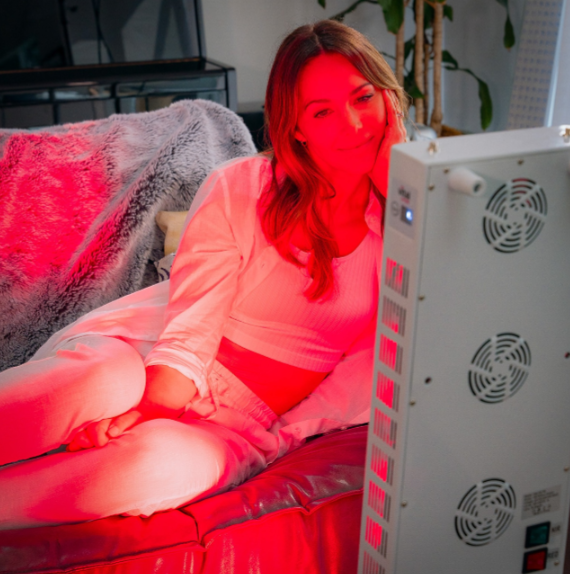
For most people, starting a GLP-1 is about more than watching a number on the scale decrease. It's about wanting to recognize themselves again. To become a better version of themselves that they envisioned. To feel comfortable getting dressed. To move without thinking so much about their body. To stop putting off photos, trips, clothes, or parts of life until they finally lose the weight.
And when the weight starts coming off, the goal typically expands beyond just weighing less.
People then start thinking about how to maintain their strength. They want to feel good in the body they're working toward. They want healthier habits that make sense after the weight loss, too.
That is where GLP-1 and red light therapy become an interesting pair, and it's why Vital Red Light partnered with Natural Identity for this blog entry.
An important thing to understand is that red light therapy and GLP-1 don't do the same thing, and they aren't supposed to. Natural Identity approaches the journey through medically guided weight management, while Vital Red Light supports another side of wellness through red and near-infrared light therapy.
Together, the conversation becomes less about losing weight at any cost and more about supporting the body along the way.
What Do GLP-1 Medications Actually Do?
GLP-1 stands for glucagon-like peptide-1, a hormone the body naturally produces.
Among its jobs, GLP-1 helps regulate appetite, influences feelings of fullness, affects how quickly food leaves the stomach, and plays a role in blood sugar regulation. GLP-1 receptor agonist medications mimic some of those effects, which is one reason they can be effective for weight management in appropriate patients.
And the weight loss can be significant.
But there is an important distinction between losing weight and losing only body fat.
When body weight drops substantially, some lean tissue can be lost along with fat. A 2026 systematic review and meta-analysis found that lean mass accounted for approximately 25% to 39% of total weight lost with several incretin-based therapies.
So, let's say someone lost 40 pounds on GLP-1. Most would assume that all 40 lbs lost came from fat, but the body doesn't operate that way. Some of the weight can come from lean mass, including muscle and body water. So, if about 25% of those 40 lbs came from lean mass, then about 30 lbs would be fat and other weight, and about 10 lbs would be lean mass. That's why researchers care about what kind of weight someone's losing.
That sounds concerning at first, but there is some important context. The same analysis found that the proportion of lean mass lost through intensive lifestyle interventions was comparable. In other words, preserving lean mass is worth considering during any significant weight loss, not just when someone takes a GLP-1 medication.
And that changes the conversation.
Instead of asking only, "How much weight am I losing?" it may be worth asking, "How am I supporting my body while I lose it?"

Weight Loss Is About More Than the Scale
Watching the number on a scale move can be exciting, especially after spending years trying to get it to change. But that number cannot distinguish between fat, muscle, water, and other components of body mass.
That is why the quality of weight loss matters, too.
A more comprehensive weight-management plan can include adequate nutrition, sufficient protein, resistance training, regular physical activity, sleep, recovery, and appropriate medical guidance.
In fact, the same recent analysis found that lifestyle intervention combined with resistance training produced a more favorable lean-mass profile than lifestyle intervention alone. Researchers studying GLP-1-based obesity treatment have similarly emphasized resistance exercise and adequate nutrition as important strategies for supporting lean tissue and physical function.
A GLP-1 can be a powerful tool. It just does not eliminate the need to take care of everything else.
This is also where red light therapy comes into play, although perhaps not for the reason people initially expect.
Where Does Red Light Therapy Come In?
Red light therapy, also known as photobiomodulation, uses specific wavelengths of red and near-infrared light (NIR) to interact with biological tissue. As one can gather, it works very differently from a GLP-1 medication.
Red light therapy does not mimic GLP-1, suppress appetite, or replace medical weight management treatment. Instead, photobiomodulation, or PBM, is being studied for effects involving cellular signaling, inflammation, circulation, exercise recovery, and other biological processes.
One of the most commonly discussed mechanisms involves the mitochondria.
Mitochondria help cells produce ATP, which is the cell's usable energy currency. PBM research has explored how red and NIR light may influence mitochondrial and cellular processes, which is one reason the technology has been studied across such a wide range of applications.
For someone going through a significant lifestyle change, red light therapy takes on an entirely different role.
GLP-1 treatment can address one part of the journey. Red light therapy can become part of the wellness and recovery routine.
What Does the Research Say About Red Light Therapy and Body Composition?
Researchers have begun examining PBM in people with obesity and studying outcomes that go beyond the applications most people associate with red light therapy.
In 2025, researchers examined 11 clinical trials involving 569 participants with obesity. Across the pooled research, PBM was associated with statistically significant improvements in measurements, including waist circumference, body weight, and BMI.
Researchers also reported changes in certain metabolic and inflammatory markers.
That does not mean someone can stand in front of a red light therapy device and expect it to replace exercise, nutrition, or medically appropriate weight-management treatment.
It also does not prove that using GLP-1 and red light therapy together produces greater weight loss. The studies did not test that combination.
However, the research shows that PBM is being investigated as part of the broader conversation on body composition and metabolic health.
And that makes the relationship between the two considerably more interesting than simply calling red light therapy another weight-loss tool.
What About Exercise and Muscle Recovery?
Exercise becomes particularly important when body composition is changing.
Resistance training gives muscles a reason to stick around. It also supports strength and physical function, which matter long after someone reaches a goal weight.
Red light therapy has its own body of research surrounding exercise and muscle recovery.
Research suggests that PBM before exercise may help with muscle endurance and recovery, while NIR light has also been associated with less post-workout soreness and muscle activation. The evidence is still developing, though. Research specifically on whole-body red light therapy remains limited, and results have not been consistent across every measure studied.
So there is a promising body of research here, but there is also a reason to be precise.
Red light therapy should not be presented as a way to prevent muscle loss caused by GLP-1 medications. We simply do not have evidence establishing that.
Instead, it can be viewed as one potential part of the recovery and wellness routine surrounding the exercise, movement, and healthier habits that remain important during weight loss.
What Red Light Therapy Cannot Replace
There is a tendency in wellness to find one promising tool and expect it to do everything.
That is not how we view red light therapy at Vital Red Light.
Red light therapy does not replace a GLP-1 medication when one has been prescribed by a qualified healthcare professional. It does not replace resistance training. It does not replace protein, nutritious food, sleep, or regular movement.
And it certainly should not replace medical guidance. It is another tool.
That distinction matters because a sustainable wellness routine rarely depends on finding one product, medication, workout, or diet capable of solving every problem.
The better question is how different tools can serve different purposes.
Why Natural Identity and Vital Red Light Go Hand-in-Hand
As mentioned previously, there's a partnership between Vital Red Light and Natural Identity because both brands share two common goals: helping people feel better in their bodies, and supporting overall wellness.
Natural Identity is a South Florida-based wellness and longevity telehealth practice that provides personalized care across concierge diagnostic testing, weight management, hormone optimization, and medical-grade skincare solutions.
Natural Identity approaches the weight-loss journey through medically guided weight management, helping eligible patients explore options such as GLP-1 treatment as part of their individual care.
Vital Red Light approaches wellness from a different angle. Our red light therapy devices bring red and NIR light into the home, making it easier to incorporate photobiomodulation into an existing wellness, fitness, skincare, or recovery routine.
We are not trying to make two completely different things sound like they perform the same job. They don't. That is actually the point.
Adriana Gonzalez, MSN, APRN, FNP-C, founder and clinical director of Natural Identity, views red light therapy as a valuable complement to GLP-1 and peptide protocols, particularly for supporting muscle preservation and skin quality during periods of significant weight change. That's her clinical perspective based on how she structures care for her own patients, not a claim that red light therapy changes GLP-1 outcomes. As covered above, the research on that specific combination doesn't exist yet. What her view does reflect is how a clinician managing this process day to day thinks about where recovery-focused tools fit alongside medical treatment.
What Working With Natural Identity Actually Looks Like
A lot of hesitation around starting a GLP-1 program comes from not knowing what the process actually involves. Here's a plain look at how Natural Identity structures care.
Before anything is prescribed
Natural Identity starts with a full review of health history, goals, current medications, and labs before recommending anything. Certain findings, such as a history of thyroid cancer, are treated as disqualifying and would rule GLP-1 treatment out entirely. Tirzepatide is the medication most commonly recommended, though the specific plan depends on individual health history and goals.
If weight loss is the goal, a metabolic panel kit is sent to the patient's home. Bloodwork covers a full panel, and patients also have the option to have blood drawn in person at their local lab. Results are typically back within 24 to 48 hours, and a plan is built and sent to the patient within two days of receiving labs, with a follow-up conversation to answer questions before treatment starts.
How the plan is built
Rather than starting a patient on multiple medications or peptides at once, Natural Identity builds plans around what's clinically necessary first, adjusting based on patient response and preference from there. Dosage increases typically don't happen until around month three, which reflects a slower, more monitored approach rather than front-loading treatment.
Ongoing monitoring
Care doesn't stop once a prescription starts. Patients have weekly check-ins during the first week, and monthly check-in forms begin from the third week onward. Labs are repeated twice a year to track how the body is responding over time.
Support along the way
Injection guidance is provided through video tutorials, and patients have direct chat access to Gonzalez, in addition to a patient-facing app for scheduling and communication. Appointment reminders are automated, so patients aren't left to track everything themselves. Natural Identity also offers support in Spanish and Italian.
One detail worth knowing, especially given how much public conversation there's been about GLP-1 sourcing: Natural Identity works exclusively with 503A and 503B pharmacies, and medications are compounded to order rather than sourced in bulk.
Building a More Complete Wellness Routine
There is no universal GLP-1 routine because medical needs, medications, activity levels, body composition, and goals vary from person to person.
But it can help to think about the journey in pieces.
Medical care handles the clinical side. Nutrition helps provide the protein, calories, vitamins, minerals, and other nutrients the body needs. Resistance training and movement support muscle and physical function. Sleep and recovery give the body time to adapt.
Red light therapy can sit alongside those habits rather than competing with them. And perhaps most importantly, none of these habits needs to be perfect to matter.
Weight loss can already require a substantial adjustment to someone's everyday life. The goal should not be to create another impossible wellness checklist. It should be to build a routine that supports where the body is going, and that can realistically continue once the initial excitement of seeing the scale move wears off.

Think Beyond Losing Weight
GLP-1 medications have given many people a new way to approach weight management, but reaching a lower number on the scale is not necessarily where the story ends.
It's imperative to remember that there is a body behind that number.
It still needs to move. It still needs muscle. It still needs nutrients. It still needs rest. And it still deserves attention even when the scale is moving in exactly the direction someone hoped it would.
That is the bigger idea behind bringing Natural Identity and Vital Red Light together.
The science does not show that red light therapy makes GLP-1 medications work better, and we are not going to pretend that it does.
What it does tell us is that meaningful weight management is bigger than a single intervention. GLP-1 treatment, nutrition, physical activity, muscle health, recovery, and sustainable wellness habits can all have different roles in the same journey.
Natural Identity can help with one important part of that process. Vital Red Light can be there for another.
Ready to Support More Than the Number on the Scale?
Your wellness journey should be about more than simply losing weight. Explore how Natural Identity and Vital Red Light are bringing medically guided weight management and red light therapy together to support a more complete approach to feeling better.
Book a consultation with the founder and clinical director of Natural Identity, Adriana Gonzalez, MSN, APRN, FNP-C.
Incorporate red light therapy into your life by selecting the Vital Red Light device you need to meet your health goal.
Share


See More Blog Posts



Explore Red Light Devices


Follow vitalredlight
Get 10% OFF
Your First Device
Join 200,000+ subscribers for exclusive discounts, science deep-dives, and
protocols from clinical experts.
By subscribing you agree to our Privacy Policy. We never sell your data. Discount applies to first-time purchases only.

Medical-grade red and near-infrared light therapy for at-home use. Clinically validated. Third-party tested. Built to last.


General
- Home
- Shop
- Reviews
- Blog
- Red Light for Business
- Vital App
- Contact Us
Learn
- About us
- How it works?
- Third Party Testing & Certification
- Benefits
- Vs. Competition
- Discount Code
- Military & First Responder Discount
Help
- FAQ
- Wholesale
- Returns
- Warranty
- Affiliates
- Financing
- HSA/FSA
- Careers
Contact
- support@
vitalredlight .com - (844) 848-2575
- 474 SW 12th Ave,
Deerfield Beach, FL, 33442
© 2025–2026 Vital RLT LLC. Part of the Paradox Brands family.