Red Light Therapy vs Laser Therapy: What’s the Difference?
Quick Answer
LED red light therapy and low-level laser therapy can both deliver photobiomodulation, which uses light to influence biological activity without intentionally destroying tissue. LEDs typically illuminate a broader area, while low-level lasers often target smaller spots. Laser resurfacing is a different procedure that deliberately removes or heats tissue to change skin texture and appearance. A laser can also emit red or near-infrared light. The right comparison depends on your goal, the specific device, its settings, and the evidence supporting that use.
Key Takeaways
- Red and near-infrared describe light wavelengths. LED and laser describe light sources.
- Some LED and low-level laser treatments share the photobiomodulation category.
- Laser resurfacing has different mechanisms, recovery needs, and treatment goals.
- A clinical laser study does not establish that an at-home LED panel delivers the same results.
- Choose around your goal, relevant evidence, device instructions, and any need for professional assessment.
You’re looking into light treatments, and suddenly an LED panel, a cold laser, and a skin resurfacing procedure all seem to promise something similar. How are you supposed to compare them?
Understanding red light therapy vs laser therapy starts with one question. Which laser treatment are we talking about?
Some lasers belong in the same broad treatment category as LED red light devices. Others deliberately change skin tissue in ways a home panel does not.
Once you separate those approaches, choosing your next step becomes much clearer. And if your goal is a light therapy routine you can manage at home, Vital Red Light gives you practical reasons to choose a panel over booking ongoing appointments.
First, “laser therapy” can mean very different things
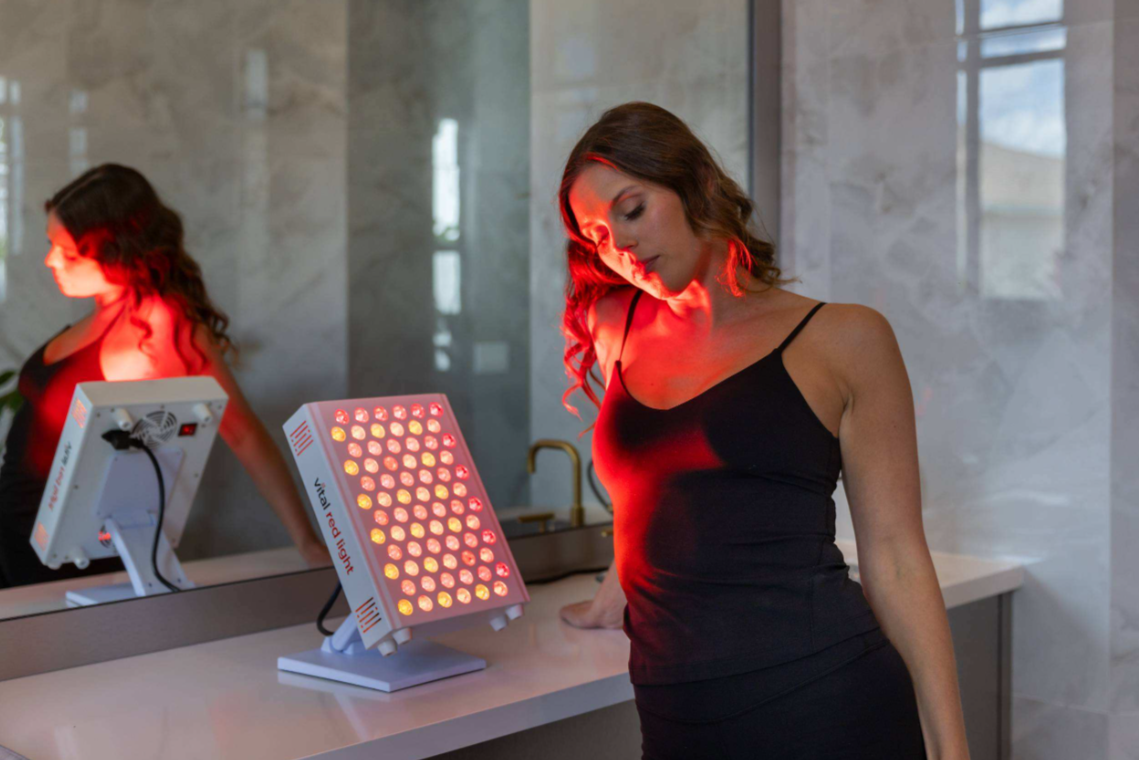
An LED red light device uses light-emitting diodes to deliver visible red light. Many also include near-infrared wavelengths, which you cannot see. Panels, masks, and handheld devices offer different ways to position that light.
Low-level laser therapy uses laser light under parameters intended to influence biological activity without intentionally burning or removing tissue. You may also hear it called cold laser therapy. “Cold” describes its nonthermal treatment purpose, not a cooling sensation.
These approaches can fall under photobiomodulation, often shortened to PBM. The term encompasses certain treatments using LEDs or lasers, rather than identifying one particular machine. pmc.ncbi.nlm.nih.gov
Researchers are investigating how absorbed light affects cellular activity, including proposed effects on mitochondrial enzymes and cell signaling.
Higher-powered laser procedures may instead use heat or tissue removal to accomplish their purpose. Resurfacing is one example. Hair removal and treatments for blood vessels are other laser applications, each requiring its own explanation.
Red light and laser light therefore overlap. One describes part of the light spectrum. The other describes how light is produced.

Red light therapy vs low-level laser therapy
This is the closer comparison because both approaches can involve PBM. Still, sharing a category does not make their devices or results interchangeable.
How the light is delivered
LED panels distribute light from multiple emitters across an area. A low-level laser may deliver light through a smaller treatment spot, although laser arrays and scanning systems can cover larger areas.
Laser light typically has greater coherence, meaning its waves have a more organized relationship. Lasers can also produce highly directional beams. LEDs generally emit less coherent light across a wider angle, with lenses affecting the final distribution.
Those optical differences explain device design, but cannot tell you which treatment will work better for your goal. The research does not establish that coherence is necessary for PBM effects.
The numbers that matter
Compare wavelength, irradiance, meaning light power reaching a given area, and exposure time. Irradiance and time determine surface energy exposure under a specified setup.
Treatment area, contact with the skin, distance, pulsing, and session frequency also matter. Electrical wattage alone does not tell you how much light reaches the treatment area.
Our guide to red light therapy dosage explains why minutes and joules need that context. Avoid copying a clinical laser schedule onto a panel simply because both list a similar wavelength.
What using it involves
A home panel lets you build a routine without traveling to an appointment for every session. A provider delivering low-level laser therapy may position a probe over specific sites and adjust a condition-specific treatment plan.
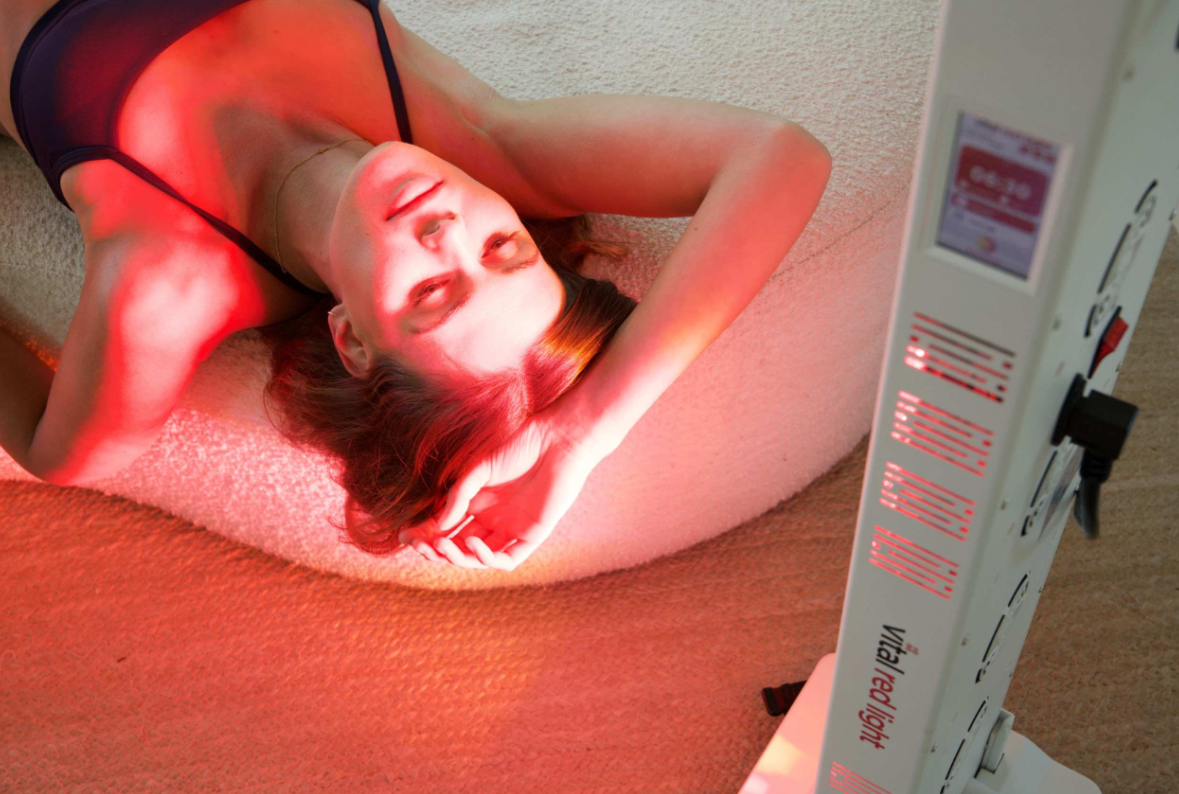
For someone who wants hands-free LED use at home, a tabletop panel such as Vital Pro 2.0 offers a practical advantage over a handheld device you must move from spot to spot. Position it according to the instructions, use the supplied eye protection as directed, and let the stand hold the device.
Neither setting defines the entire category. Some low-level laser products are designed for home use, while LED treatments are also offered professionally. Check the exact device and instructions rather than assuming “laser” always means an appointment.
Red light therapy vs laser resurfacing
If your concern is acne scarring or a significant change in skin texture, comparing a panel with resurfacing involves different treatment goals.
As Mayo Clinic explains, ablative procedures remove the outer skin layer and heat underlying tissue. Nonablative approaches use heating without removing that outer layer. Fractional systems treat microscopic columns rather than the entire surface at once.
Treatment can address selected concerns such as wrinkles and acne scars. The approach depends on an assessment of your skin, medical history, expectations, and ability to follow aftercare.
Recovery varies. Ablative procedures generally require more healing than nonablative treatments. Risks include prolonged inflammation, infection, pigment changes, and scarring. Skin tone and a history of pigmentation problems can affect treatment selection.
Ask the provider about their experience treating your skin tone and the specific concern you want addressed.
An at-home LED panel does not perform resurfacing. Choosing it because it fits your routine should not come with an expectation that it will produce the same changes as a procedure that deliberately removes or heats tissue.
A side-by-side comparison
These are broad categories. Individual devices and treatment plans vary.
| What to compare | At-home LED red/near-infrared devices | Low-level laser therapy | Laser resurfacing |
|---|---|---|---|
| Light source | LEDs emitting selected wavelengths | Laser, sometimes in an array | Procedure-specific laser |
| Typical purpose | Home PBM use; supported outcomes depend on the device and protocol | Targeted PBM for selected concerns | Address selected skin texture, scar, or aging concerns |
| Treatment area | Small handheld area to broader panel coverage | Often targeted spots; some systems cover larger areas | Selected skin areas, sometimes treated fractionally |
| Usual setting | Home; LEDs also appear in clinics | Often a clinic; some home devices exist | Professional treatment setting |
| Recovery considerations | No intentional resurfacing wound; irritation can occur | No intentional tissue destruction; precautions depend on the device | Healing and aftercare vary by procedure |
| What to verify | Intended use, output at treatment distance, instructions, eye protection | Condition-specific evidence, parameters, operator guidance, eye protection | Suitability, provider experience, risks, recovery, aftercare |
Where do other modalities fit?
Other wellness treatments may appear beside red light devices, but their mechanisms differ.
Infrared saunas use infrared energy to heat your body. PBM does not depend on deliberately heating tissue to create its intended effect. Our sauna comparison explores that distinction. Check individual systems, since some combine heaters with separate LED components.
IPL, or intense pulsed light, uses filtered, broad-spectrum flashes rather than a laser beam. DermNet describes how absorbed light creates heat in selected targets, such as pigment or blood vessels. It is not the same treatment as LED PBM.
PEMF, or pulsed electromagnetic field therapy, uses changing magnetic fields generated electrically. NCCIH explains these electromagnetic devices. PEMF is a separate modality from optical light therapy, with its own evidence and precautions.
Their presence in the same wellness space does not establish that combining them improves results.
What does the research actually tell you?
Evidence becomes useful when you can connect a finding to the treatment actually studied.
In a randomized clinical trial, researchers enrolled 76 people with facial wrinkles. Treatment groups received 633 nm, 830 nm, or a combination, with a sham comparison. Sessions occurred twice weekly for four weeks, followed by assessment over three months.
Researchers reported improvements in wrinkle measurements and elasticity in the active treatment groups. That supports investigating those LED protocols for facial rejuvenation. It does not establish an equivalent result from every home panel, and it did not compare those devices with laser resurfacing.
For a different question, a neck-pain review pooled 16 randomized trials and reported benefits from low-level laser therapy in the settings studied. That is condition-specific laser evidence. It cannot establish that standing in front of a home LED panel treats the cause of your neck pain.
Look for the outcome measured, the comparison group, and how long participants were followed. A laboratory finding about cellular activity is different from a meaningful improvement in people.
How to choose your next step
Start by naming the change you want. “Improve the appearance of fine lines” is more useful than “get healthier skin.” “Find out why my shoulder hurts” calls for assessment before shopping for a light device.
For an undiagnosed symptom or a specific skin condition, begin with an appropriate clinician. If you are considering resurfacing, ask which procedure addresses your concern and what a realistic result would look like.
Then compare the commitment. A home device requires space, positioning, and consistent use. Professional treatment involves appointments and may involve recovery. Convenience can help you maintain a routine, but it does not measure clinical effectiveness.
Useful questions include the following:
- What exact device and treatment will I receive?
- What evidence supports it for my goal?
- How closely does that evidence match the proposed settings and schedule?
- What eye protection, medication precautions, or aftercare apply?
- How will we judge whether it is helping, and when should we reassess?
For home shopping, also ask about coverage at the recommended distance. Our device guide can help you think through size and setup.
Why choose Vital Red Light for your home routine?
If at-home LED therapy matches your goal, your next decision is which device makes it easiest to put that routine into practice. This is where Vital Red Light has a clear role.
The Vital Pro 2.0 combines nine wavelengths across blue, yellow, red, and near-infrared with a touchscreen, an installed tabletop stand, and an automatic shutoff timer.
Compared with a device limited to red and near-infrared, it gives you a broader selection of wavelengths in one panel. Choose settings according to the supplied instructions and your intended use.
The stand supports hands-free positioning. The display puts controls on the device. The timer gives you an automatic stopping point, while your actual session should follow the instructions for the selected use.
The Pro 2.0 also lists a three-year warranty and a 30-day return period. Review the current terms before ordering, but include ownership support in your comparison alongside the hardware.
For broader coverage, our Vital Elite 2.0 offers a larger panel format. You can choose around the space you have and the area you want to expose instead of buying a device that is awkward to use.
For people who value a repeatable home routine, these are practical reasons to choose Vital. You get control over when you use your LED device, with options for setup and coverage. Clinical laser treatment may serve a different purpose, so the right choice still begins with your goal.

Frequently asked questions
Is red light therapy the same as cold laser therapy?
They can overlap within PBM, but the names describe different things. Cold laser therapy uses a laser source. Red light therapy can use LEDs or lasers, depending on the device.
Can lasers emit red or near-infrared light?
Yes. A laser’s wavelength determines whether its output falls in the red, near-infrared, or another part of the spectrum. “Laser” alone does not identify the wavelength or treatment purpose.
Is laser therapy stronger than LED red light therapy?
There is no useful universal ranking. “Stronger” could mean total power, power per area, or a more aggressive tissue effect. Compare specific devices and protocols. Higher output alone does not establish better results.
Can an at-home red light panel replace laser resurfacing?
No. A panel does not perform the tissue removal or controlled heating used in resurfacing. Ask a dermatologist which approach matches the skin change you want.
Can you use red light therapy alongside professional treatments?
Sometimes. The American Academy of Dermatology discusses red light as a complementary option in clinician-directed skin care. Your treating clinician should determine whether your specific device is appropriate and when to use it. Follow their guidance and the device instructions rather than choosing a universal waiting period.
Choosing an approach that fits your goal
The most useful red light therapy vs laser therapy comparison connects your goal with the evidence, device, and treatment setting. Once you know those details, you can weigh convenience and professional care with clearer expectations.
If a convenient LED routine is what you are looking for, explore Vital’s devices and find the coverage and controls that fit your space. Our team can help with product features and setup. For diagnosis or a professional treatment plan, bring your questions to a qualified provider.
Share