How to Choose Commercial Red Light Therapy Devices for Your Establishment: Gym or Spa
Red light therapy has moved well past the home wellness trend stage. Gyms, spas, chiropractic offices, and recovery studios are adding it as a real service line, not just a nice-to-have amenity. If you're considering commercial red light therapy devices for your own establishment, the decision comes down to more than just picking whatever panel looks good in photos.
This guide walks through what actually separates commercial red light therapy devices from the home units your clients might already own, what specs matter, what the FDA actually allows you to claim, and what the real numbers look like before you commit to a purchase.
Why Gyms and Spas Are Adding Red Light Therapy
The market for red light therapy equipment has grown fast. According to Grand View Research, the global red light therapy beds market was valued at 162.3 million dollars in 2024 and is projected to reach 491.6 million dollars by 2033. The business-to-business segment, meaning clinics, spas, and gyms, holds the largest share of that revenue, which tells you this isn't a home gadget trend anymore. It's an established commercial category.
That growth matters if you're deciding whether commercial red light therapy devices are worth the investment for your space. Clients are already familiar with the concept from home devices and social media, which means less time spent educating people on what it is, and more time converting curiosity into booked sessions.
What Actually Separates Commercial Red Light Therapy Devices From Consumer Ones
The biggest difference isn't really the light itself. It's what the device is built to withstand.
A home unit might get used a few times a week by one or two people. Commercial red light therapy devices need to survive back to back sessions all day, every day, often with different clients using them within minutes of each other. That means the internal components, cooling systems, and housing all need to be built for a completely different level of wear.
Coverage area matters more too. A small panel that works fine for a single person doing a targeted treatment at home isn't going to cut it for a full body session in a commercial setting where clients expect efficient, whole body treatment in a set time slot. Commercial red light therapy devices are generally larger, more powerful, and built with simpler, more durable controls so staff can operate them consistently without extensive training.

The Specs That Actually Matter: Wavelength and Irradiance
Once you're comparing actual units, two specifications matter more than anything else on the spec sheet.
Wavelength tells you what the light can actually do. Red light in the 630 to 660 nanometer range is generally associated with skin level benefits, while near-infrared light in the 810 to 850 nanometer range is associated with deeper tissue penetration for muscle and joint support. Quality commercial red light therapy devices typically combine both ranges so clients get a fuller range of benefits in one session.
Irradiance is the specification that's easiest to overlook and the most important to check. According to Truemed, buyers should focus less on marketing terms like "strongest" and more on whether a device delivers honest, consistent light intensity at a practical treatment distance, usually somewhere around six to twelve inches. A device with a high wattage number but weak irradiance at actual treatment distance won't deliver the dose your clients are paying for.
For a commercial setting, irradiance also affects your daily schedule. Devices with stronger, verified irradiance can deliver an effective session in less time, which directly affects how many appointments you can fit into a day. This is one of those areas where it pays to ask a manufacturer for real, independently verifiable numbers rather than accepting marketing copy at face value.
FDA Clearance, and What It Actually Means for Your Business
This is the part that gets glossed over in a lot of sales conversations, and it shouldn't be.
According to the FDA's own premarket guidance, photobiomodulation devices, which is the technical term for red and near-infrared light therapy devices, are regulated as Class II medical devices under specific federal regulations. Clearance through this process is tied to the exact indications reviewed for that specific device, not a blanket approval to make any claim a manufacturer wants.
What that means for your business is simple. Whatever commercial red light therapy devices you choose, the claims you're legally allowed to make to clients depend on what that specific device was actually cleared for. If a manufacturer can't clearly tell you what their device is cleared to claim, that's worth treating as a red flag rather than a technicality.
This isn't meant to scare you away from the category. It's meant to help you buy from a manufacturer who can answer these questions directly, and to help you market the service honestly once you do.
The Legal Side Business Owners Skip Past
Beyond the device itself, there's a broader compliance layer worth understanding before you launch any new wellness service. According to a compliance guide for gyms and wellness studios, marketing claims that go beyond a device's actual FDA clearance can count as misbranding under federal law. That risk applies to your own marketing materials as well as anything an influencer or partner posts about your service, even if they're not paid in cash. Compensation in the form of free sessions or memberships still requires clear, visible disclosure.
None of this needs to be complicated. It just means having someone on your team review your marketing language against what your specific commercial red light therapy devices are actually cleared to claim, before that language goes live on your website or social channels.
The Business Case: Cost, Pricing, and Realistic ROI
The demand side of this decision looks strong. Enlighten Continuing Education reports that the U.S. spa industry brought in 23.5 billion dollars in revenue in 2025 with 191 million visits, and notes that guests increasingly want results-oriented services rather than generic relaxation treatments. That shift favors a category like red light therapy, which can be marketed around specific, tangible outcomes like recovery and skin support.
On the equipment side, Grand View Research found that premium grade devices hold the largest revenue share in the market, ahead of budget options. That's a useful data point if you're tempted to go with the cheapest available unit. In a commercial setting, where a device needs to hold up to daily, multi-client use, the cheaper option often ends up costing more in downtime, repairs, or early replacement.
Exact return on investment will vary a lot based on your location, pricing structure, and how many sessions you can realistically book per day, so it's worth building your own numbers rather than trusting any single generic breakeven claim you see in a sales pitch.
What to Actually Look for When Choosing a Model
Pulling this together, here's a practical checklist for evaluating commercial red light therapy devices before you buy:
- Confirm both red and near-infrared wavelengths are included, not just a generic "red light" label.
- Ask for real, independently verifiable irradiance numbers at your intended treatment distance, not just total wattage.
- Get clarity on the device's specific FDA clearance and what claims it actually supports.
- Check coverage area against your typical session type, targeted treatment versus full body.
- Look for simple, durable controls your staff can operate reliably without extensive retraining.
- Ask about warranty terms and support, since commercial use puts more wear on a device than home use ever will.
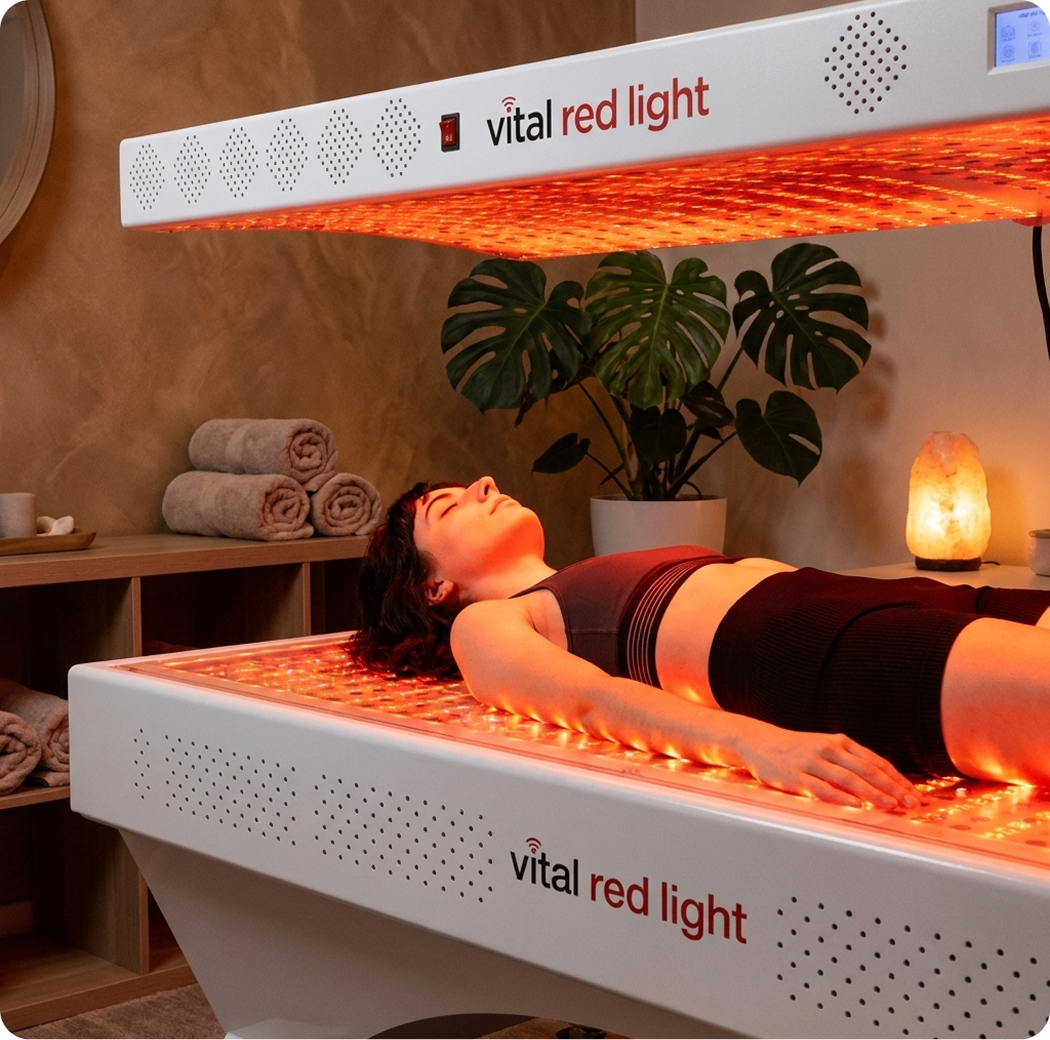
Vital Red Light's commercial systems lineup is a good example of this checklist in practice. The Premier, Ultimate, and Bed models are built with plug-and-play functionality specifically for gyms, spas, and chiropractic settings, with an emphasis on low EMF output and third-party testing rather than just marketing claims.
The Bottom Line
Choosing commercial red light therapy devices for your gym or spa comes down to a few honest questions. Does the device deliver verifiable specs at the distance your clients will actually use? Is it cleared for the claims you plan to make? Can it handle real, daily commercial use without breaking down? And does the business case actually pencil out for your specific location and pricing?
Get those answers before you buy, and commercial red light therapy devices can become a genuinely strong addition to your service menu, one built on real specs and honest marketing rather than hype. Consider Vital Red Light when you think of getting a commercial red light therapy device.
Share