Does Red Light Therapy Help With Hyperpigmentation?

Short answer: sometimes, and it depends heavily on what’s causing your hyperpigmentation and how carefully you use the device. Red light shows real promise for some kinds of discoloration. For melasma and dark marks on deeply pigmented skin, the same light that can help at a low dose can make things worse at a high one. If you have darker skin, that trade-off is the whole story, so most of this article is about getting it right.
What hyperpigmentation actually is
Hyperpigmentation is a catch-all term for skin that's darker in some spots than others. The darkening comes from excess melanin, and the trigger matters more than most product claims imply.
Post-inflammatory hyperpigmentation (PIH) is the dark mark left behind after acne, a bug bite, or any irritation. Melasma is a chronic, hormone- and light-driven pattern, usually on the cheeks, forehead, and upper lip, and it's notoriously stubborn and prone to relapse. Sun spots and age spots come from cumulative UV exposure. These respond differently to treatment, which is why "does red light therapy help with hyperpigmentation" doesn't have one answer.
What red light therapy does
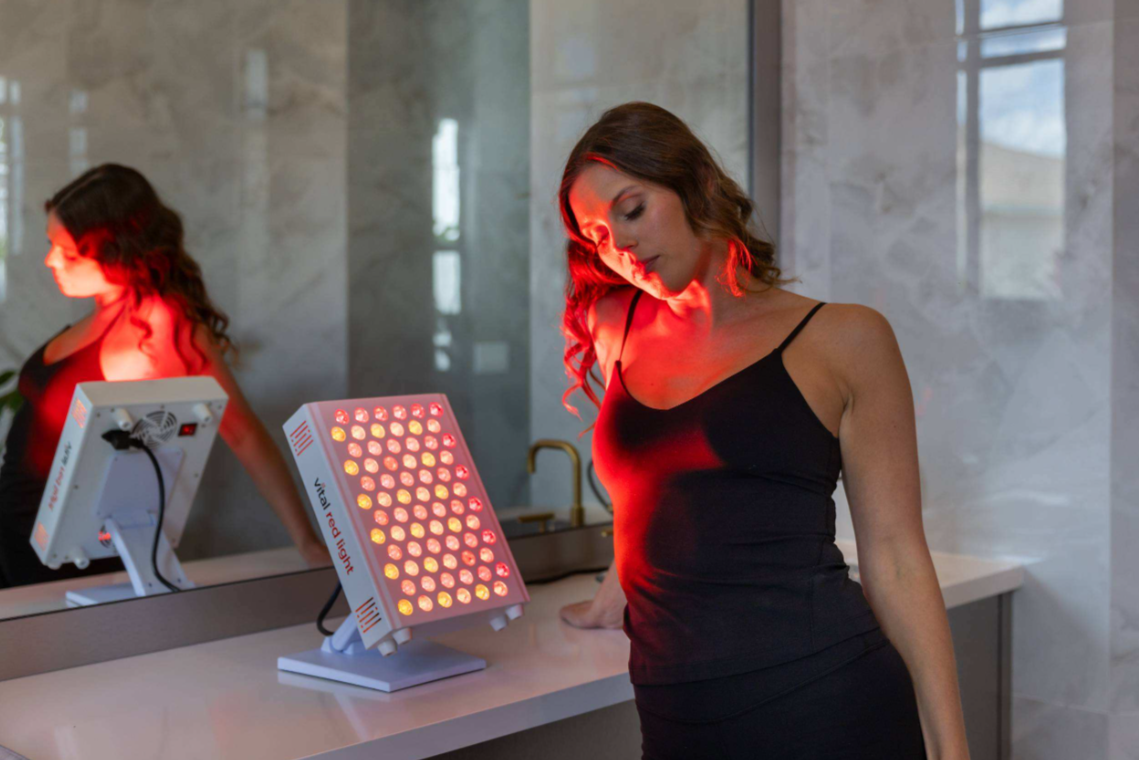
Red light therapy, also called photobiomodulation, uses red light (roughly 620 to 700 nm) and near-infrared light (700 nm and up). The light is absorbed by an enzyme in your cells' mitochondria called cytochrome c oxidase, which raises ATP production and prompts skin cells to make more collagen. That's the pathway behind its better-established uses: fine lines, skin texture, wound healing, and recovery.
Pigment is a different mechanism. Lab research shows red light can dial down tyrosinase, the enzyme that drives melanin production. In one study, a 660 nm LED suppressed tyrosinase activity and reduced melanin in melanoma cells and mice, supporting the idea that red light might fade dark spots rather than cause them. But the effect depends on dose: a 2025 study testing multiple wavelengths on pigment cells found light that suppressed melanin at low intensity flipped to stimulating it at higher intensity, because a strong dose switches on the cell's pro-pigment defenses. Think of it like watering a plant: the right amount helps, too much does damage.
What the evidence says about pigmentation
Here's the honest state of the research, an important part.
A 2024 integrative review in Photodermatology, Photoimmunology & Photomedicine examined nine clinical studies and concluded that photobiomodulation can reduce melasma-associated hyperpigmentation, with the effect associated with low radiant doses (roughly 1 to 20 J/cm²).
The American Academy of Dermatology also lists dark spots and discoloration among the concerns that showed improvement in general red light studies. In one study it cites, 90 patients received eight facial LED treatments over four weeks, and more than 90% reported some improvement, including lightening of dark spots.
So there's a real case that red light, dosed low and correctly, can help.
The catch is the other half of the same research. The therapeutic window is narrow. Independent science educators who follow this literature note that people have reported darker pigment from red light used alone, most likely from pushing past the beneficial dose, where overstimulating pigment cells overrides the pigment-reducing effect (Lab Muffin Beauty Science). The dose that helps and the dose that hurts aren't far apart, and at-home users don't have a clinic's control over either.
Why this matters more for darker skin
If you have deeply pigmented skin, this is the section to pay close attention to, maybe read over more than once.
The AAD is direct about people with darker skin tones being more sensitive to visible light, including red light, and this sensitivity can cause hyperpigmentation where the resulting dark spots are more intense and longer-lasting than the ones sunlight leaves. The AAD's standing advice for darker skin is to talk with a board-certified dermatologist before starting an at-home device.
The safety research backs this up with numbers. Two controlled trials led by dermatologist Jared Jagdeo escalated red LED doses on volunteers' forearms and found the maximum tolerated dose was 320 J/cm² for people with darker skin tones, versus 480 J/cm² for non-Hispanic white volunteers. The lower ceiling was set after an African-American participant developed a blister at 480 J/cm². In a 50-person cohort dosed at 320 J/cm², ten participants with darker skin tones developed transient post-inflammatory hyperpigmentation.
Two things to hold in mind about those numbers. They came from extreme experimental exposures, hour-plus sessions far beyond a normal ten-minute home session, and no lasting harm occurred. But they confirm the direction of the risk, which is that darker skin has less dosing headroom before pigment reacts, and the reaction is exactly the problem you'd be trying to fix.
Across the research, the single biggest driver of pigment trouble isn't the wavelength. It's heat. High-intensity devices warm the skin, and heat is a known melasma and PIH trigger. Home panels are more prone to overheating and user error than masks, which puts the most popular full-size devices squarely in the higher-risk category for this use.
Race is not a dosing setting
"Dark skin" isn't an instruction a device can follow. Darker skin tones spans a wide range of tones and responses, and two people with similar backgrounds can react differently. What predicts your response is your actual skin tone, your history with dark marks or melasma, whether you feel heat during a session, and the settings you run. Someone with medium-brown skin and no history of pigmentation may do well on a standard protocol. Someone with deeply pigmented skin or active melasma should assume they have very little room for error.

When to skip red light and see a dermatologist first
For some conditions, a device is the wrong first move. Talk to a board-certified dermatologist, ideally one who works with skin of color, before starting if you have:
- Active melasma or frequent post-inflammatory dark marks
- A photosensitive condition such as lupus
- A medication that raises light sensitivity
- Active dermatitis, broken skin, or a recent chemical peel, laser treatment, or microneedling
For melasma specifically, the evidence is promising but unsettled, and the downside of getting it wrong is a worse version of the thing you're treating. A dermatologist can tell you whether red light fits your case or whether a proven option (tranexamic acid, targeted topicals, strict sun protection) is a better starting point.
If you decide to try it: starting safely
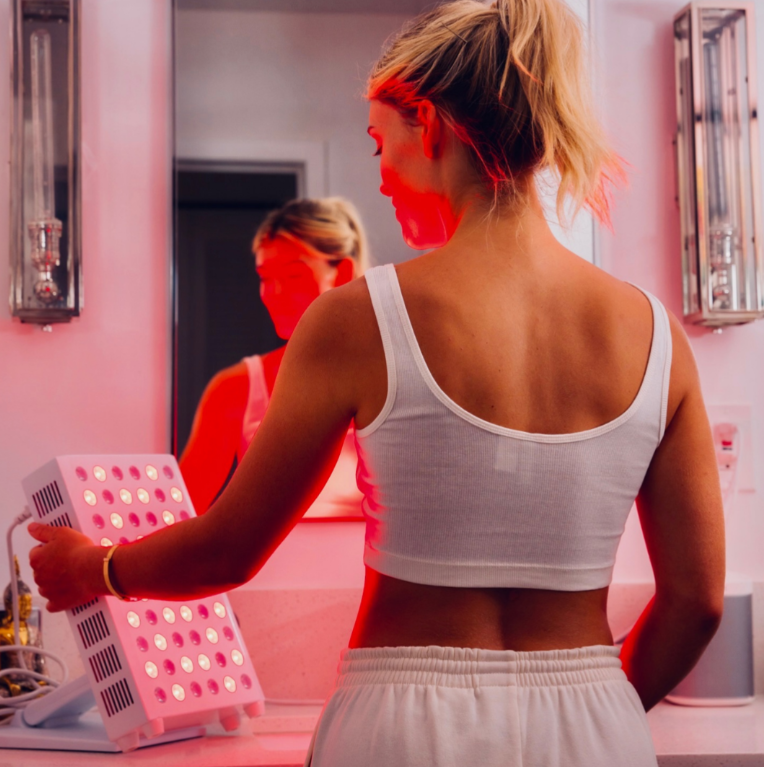
If you have darker skin and want to use a red light panel anyway, a conservative start protects you while you learn how your skin responds.
Use red and near-infrared modes only. If your device includes a blue channel, leave it off for pigmentation-prone skin, since blue light sits near the UV end of the spectrum and offers no pigment benefit here (2024 photobiomodulation review, Int J Mol Sci).
Sit at the far end of the recommended distance, since intensity drops quickly as you move back and lower intensity means less heat. Run a short first session, roughly a quarter to half the standard time. Wait 48 hours and read your skin before changing anything: watch for new darkening, patchy discoloration, itching, or redness that lingers into the next day. If nothing appears, increase one variable at a time so you always know what caused a reaction.
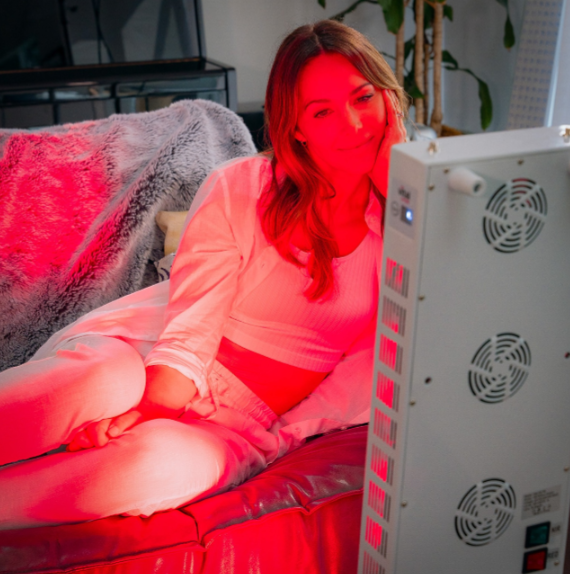
Let heat guide you. Red light therapy should feel mildly warm at most. Distinct heat means move back or stop. More warmth doesn't mean it's working harder; it means you're closer to the pigment-triggering zone. Use the eye protection your device comes with, especially in near-infrared mode.
Now, What Vital Red Light Devices Should You Buy to Help, Not Hinder You?
With everything said, here are some Vital Red Light devices to consider without blue light to not hinder your process:
-
Vital Pro:
- This is a targeted red and near-infrared LED light therapy device that improves skin, cellular health, and more. Please do not confuse this one for the Vital Pro 2.0. They are not the same
-
Vital Charge:
- This is a targeted red and near-infrared LED light therapy device that helps with skin health, recovery, pain and inflammation, sleep, and more.
-
Vital Elite:
- This is a full-body red and near-infrared LED light therapy machine that improves overall health, from skin and recovery to pain and inflammation and mental health.
The bottom line
Red light therapy can help with some hyperpigmentation at low, controlled doses, and there's genuine research behind that. But for melasma and dark marks on darker skin, it sits on a knife's edge: the same treatment can lighten or darken depending on dose and heat, and darker skin has the least margin for error. If your pigmentation is the reason you're buying a device, start with a dermatologist, not a purchase.
Once you're certain you can use red light therapy, Vital Red Light's devices will not disappoint. Check out our catalog of devices here, or contact us here if you have any questions or concerns or need any more information.
This article is for general information and isn't medical advice. Red light therapy devices are not intended to diagnose, treat, cure, or prevent any disease. Talk to a board-certified dermatologist about your specific skin before starting any new treatment.
Share