Does Red Light Therapy Work for Hair Growth? What the Research Shows

Red light therapy for hair growth has real clinical trials behind it, not just wellness-brand claims. Multiple randomized, placebo-controlled studies have tested it on both men and women with pattern hair loss, and the results have been consistent enough that dermatologists now recommend it as a legitimate add-on treatment. It's not a miracle cure, and it doesn't work for every type of hair loss, but for the most common kind, it holds up.

How It Works on Hair Follicles
The mechanism is the same photobiomodulation process behind red light therapy for skin: red and near-infrared light gets absorbed by mitochondria inside cells, boosting ATP production and giving cells more energy to do their job. On the scalp, that means more energy for follicles to stay active, plus better blood flow to the area.
Picture a follicle that's gone quiet, not dead, just resting. Light doesn't force new hair out of nothing. It nudges dormant follicles back into their working phase.
Hair growth runs in cycles: an active growth phase (anagen), a short transition (catagen), and a resting, shedding phase (telogen). Red light therapy appears to extend that active growth phase, which is a little like a job that keeps you clocked in and productive instead of sending you home early.
The discovery itself has a strange origin story. In 1967, a researcher named Endre Mester was testing whether laser light caused cancer in shaved mice and found the opposite: the treated mice grew their hair back faster than the untreated ones. That accidental finding is the reason this entire field exists.
What the Research Actually Shows
The strongest evidence comes from a series of randomized, sham-controlled trials, the gold standard for this kind of research.
A 2014 double-blind trial published in Lasers in Surgery and Medicine treated women with androgenetic alopecia using 655nm light every other day for 16 weeks and found a significant improvement in hair growth compared to a sham device. A companion study the year before found similar results in men.
A 2024 review in Facial Plastic Surgery & Aesthetic Medicine pulled together the broader research on low-level light and laser therapy for both male and female pattern hair loss and found the effect held up across multiple independent trials, not just isolated studies.
More recently, a 2026 twelve-month trial in Dermatologic Therapy followed patients using a laser helmet device and found improvement scores kept climbing through 48 weeks, with most of the gain showing up in the first 24. By the end, over 85 percent of participants were satisfied enough to want to keep using it, and nobody reported a treatment-related side effect.
The honest caveat: this evidence is strongest for early to moderate androgenetic alopecia, the common genetic pattern hair loss in both men and women. It's not well studied for other causes of hair loss, like alopecia areata or hair loss from illness or stress, so it's not a universal fix.
FDA Clearance
The first handheld laser device for androgenetic alopecia was cleared by the FDA in January 2007, and more devices have followed since. As with LED light therapy generally, clearance confirms the device meets safety standards, it isn't the same as FDA approval, which is reserved for a smaller category of higher-risk medical devices.
Red Light Therapy vs. Minoxidil and Finasteride
This isn't really a competition. Minoxidil and finasteride work through completely different mechanisms (minoxidil widens blood vessels near follicles, finasteride blocks the hormone that shrinks them), and most dermatologists treat red light therapy as something you layer on top of those, not a replacement for them. If you're already using one or both, adding light therapy doesn't cancel anything out. It's addressing a different part of the problem.
How to Use It
Based on how the actual trials were run, consistency matters more than intensity. The 2014 study used treatment every other day for 16 weeks before measuring results, and the 2026 trial showed most improvement in the first 24 weeks with gains still building at 48. This is a months-long commitment, not a two-week trial run. If you stop after three weeks because you don't see anything, that's not long enough to know either way.

What to Look for in a Device
A few things separate a device worth using from one that's just a wellness accessory with lights on it:
- A wavelength in the 630-670nm range, which is what the studies actually used
- FDA clearance specifically for hair growth or androgenetic alopecia, not just a general wellness claim
- Full scalp coverage, since a device that only reaches the crown won't help a receding hairline
- Realistic expectations set by the seller. If a product promises visible results in two weeks, that doesn't match what the research shows
Whether the device uses lasers or LEDs matters less than people assume. Both deliver the same wavelengths and both have supporting research; the practical difference is coverage area and cost, not effectiveness.
Who Should Be Cautious
Red light therapy for hair growth carries the same general precautions as other forms of light therapy: avoid it if you're on medication that increases photosensitivity, and check with a doctor first if you have an active scalp condition or are pregnant. It's considered low-risk overall, but "low-risk" isn't the same as "no precautions needed."
Can You Use a Vital Device for This?
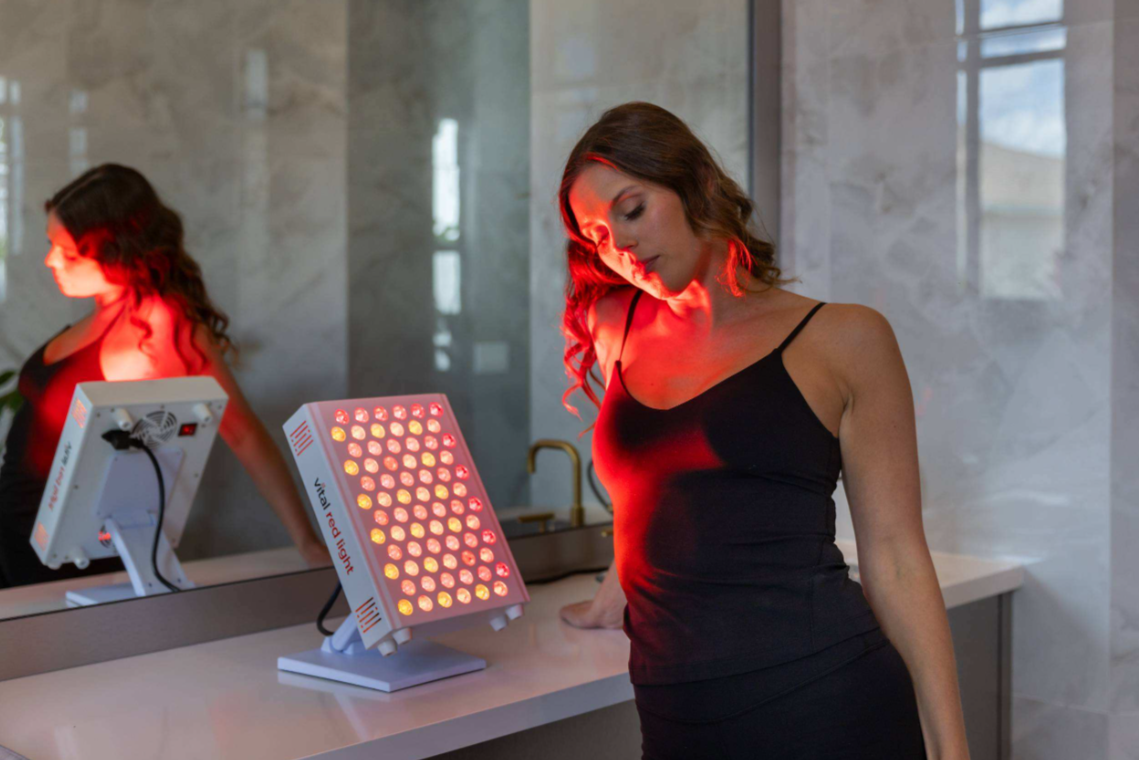
Vital doesn't sell a dedicated scalp cap or helmet, but that doesn't mean the wavelength math doesn't line up. The Vital Pro and Vital Elite panels emit red light in the 630-660nm range, sitting right inside the 630-670nm window used across the hair growth studies above. If you're already running one of these panels for skin or recovery, positioning it against the scalp for a few extra minutes isn't asking the device to do something it wasn't built for. It's the same light, just a different target.
That's not a claim that a Vital panel is clinically proven for hair growth specifically, since it hasn't been tested that way. But if you're weighing a $500+ laser cap purely for the wavelength benefit and you already own a Vital device, that's worth knowing before you buy something new.
FAQ
Does red light therapy regrow hair, or does it just slow down loss?
Both, depending on the person. The research shows it can improve density in existing thinning areas, not just stop further loss.
How long until you see results?
Most of the studies show meaningful change starting around 12 to 16 weeks, with continued improvement out to a year in longer trials. This isn't fast.
Can you use it with minoxidil?
Yes. They work through different mechanisms and are commonly used together.
Does it work for all types of hair loss?
No. The evidence is strongest for androgenetic alopecia (pattern hair loss). It hasn't been well studied for other causes like alopecia areata, thyroid-related hair loss, or shedding from illness or stress.
Share