Red Light Therapy for Face: Everything You Should Know In 2026

You're a red light therapy enthusiast who likely already knows about its potential benefits for skin health, especially when it comes to red light therapy for face care. But how well do you really understand the science behind it? Do you know which wavelengths target specific skin concerns, how long each session should last, or which devices are best suited for your goals?
In addition to being technical details, they're essential to getting the most from photobiomodulation. When using advanced wellness technology powered by clinically relevant wavelengths, like Vital Red Light's devices, understanding how red light therapy works is just as important as using it consistently.
Red light therapy for the face uses red and near-infrared wavelengths to stimulate your skin cells, supporting the production of collagen and elastin that help keep your skin firm, smooth, and even-toned. The research is compelling, the benefits are well documented, and the best results come with consistent use over time rather than overnight. In this guide, you'll learn how red light therapy benefits your skin, how to use it effectively, what to look for when choosing a device, and the science behind how it works at the cellular level.
What Red Light Therapy for Face Does for Your Skin
Most people come to red light therapy for face for the same handful of reasons, softer fine lines and firmer skin around the eyes and mouth, a more even tone, less visible redness, and a brighter overall look. Those are appearance changes, and that is the right way to think about it. Red light supports the skin's own repair machinery rather than acting like a drug.
The timeline is gradual, and it is worth setting expectations. Circulation and a fresh, slightly flushed glow can show up within the first week or two. The structural changes, the collagen-driven firmness and smoothness, build over roughly 8 to 12 weeks of steady use. The evidence is strong enough that the FDA has cleared a number of at-home red light devices for signs of skin aging, and our wrinkle explainer goes deeper on the firmness side.

Mask, Panel, or Handheld for Your Face
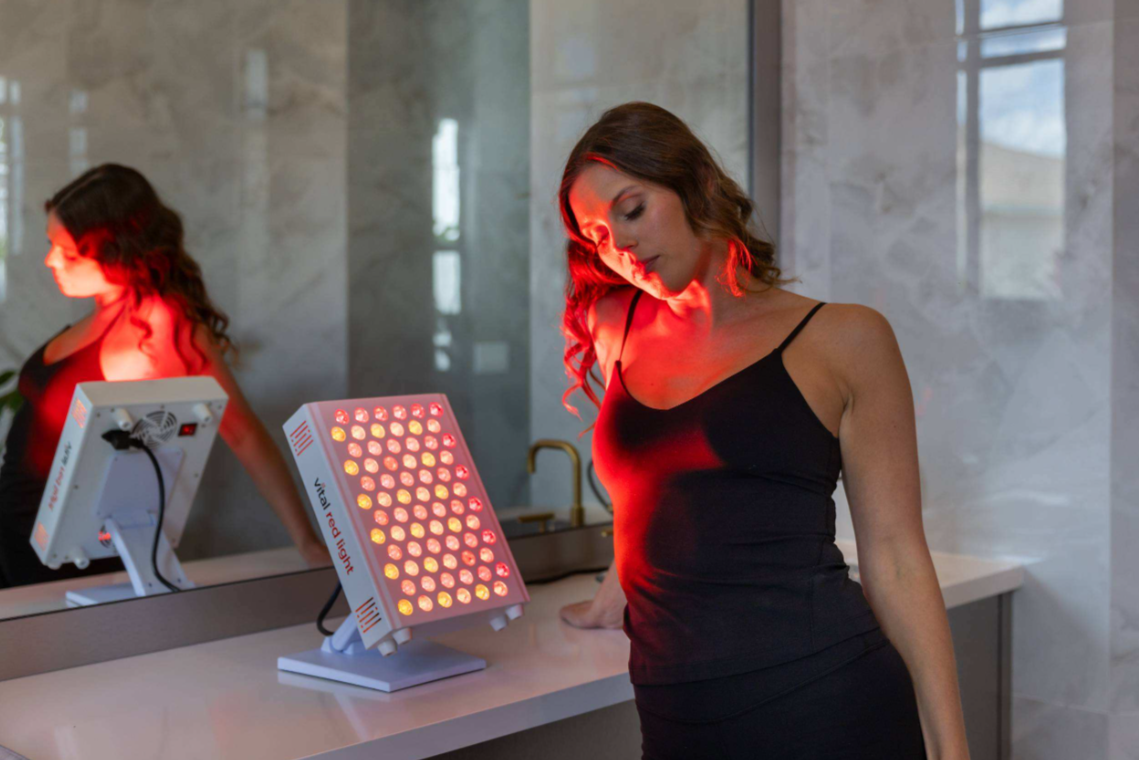
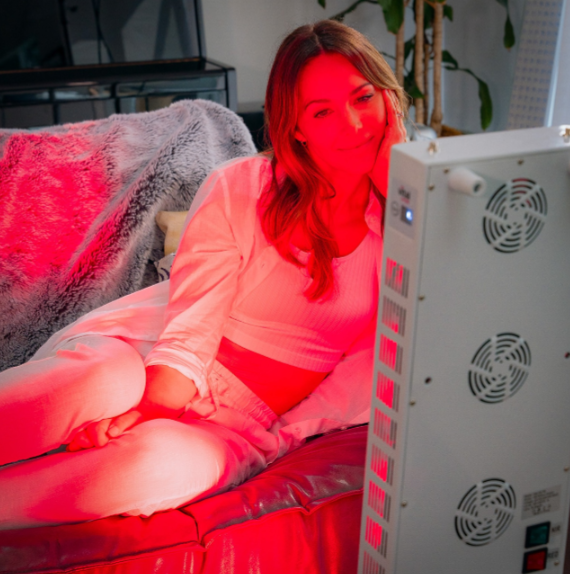
There are a few common formats, and the right one depends on how you want to use it. A panel sits on a stand or wall and treats your whole face and neck at once, hands-free, at a set distance, and it doubles for shoulders, back, or anywhere else you want coverage. A handheld wand like the Vital Charge is compact and travels well, good for treating a specific spot or working around the eyes and jaw with more control. An LED mask wraps the light close to the skin and stays put while you move around, which some people find easiest to keep up daily.
Each format delivers the same underlying benefit as long as the wavelengths and output hold up, so the choice comes down to coverage, convenience, and cost. We put the two most popular options head to head in LED face masks vs red light therapy panels, and round up strong picks in the best LED face masks and devices.
How to Use Red Light Therapy for Face
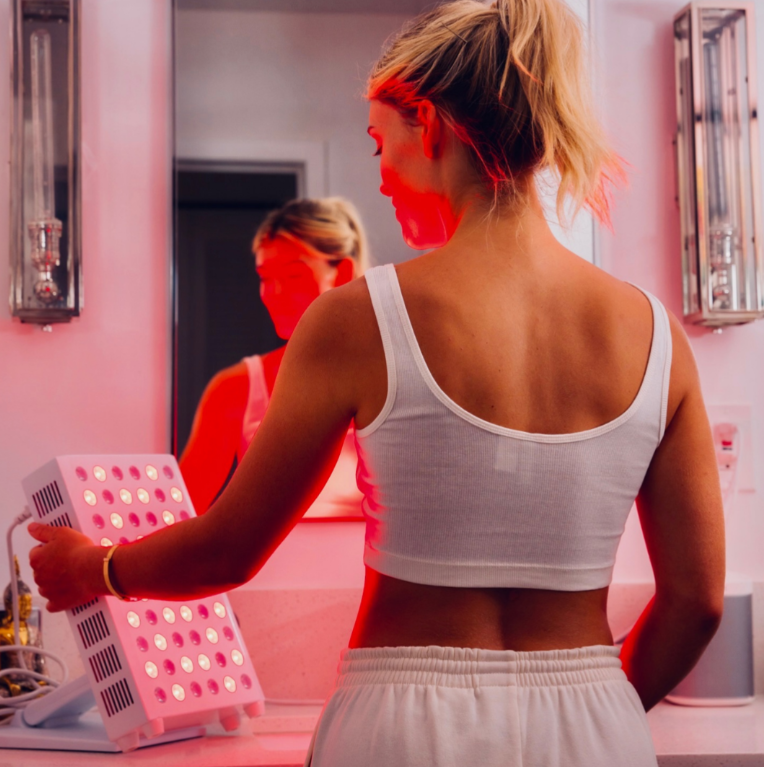
Running red light therapy for face is simple once you have a device. Treat on clean, bare skin so nothing blocks the photons, since makeup and sunscreen sit right in the light's path. Hold the device at the manufacturer's recommended distance, keep sessions near ten minutes, and aim for four to five times a week. Staying consistent matters more than long sessions, because collagen remodeling is slow and cumulative. Apply serums and moisturizer after, not before.
One caution worth stating plainly. Red light works through cellular energy rather than heat or UV, so it does not burn or thin the skin, and it layers cleanly with most actives. Still, space your sessions apart from strong photosensitizing prescriptions like certain retinoids or acids, and check with your dermatologist if you use those. Our nighttime routine gives you a ready template.
The Science, How Red Light Therapy for Face Works
If you want the mechanism behind all of that, here it is. Your skin cells run on ATP, the molecule that powers nearly everything a cell does. ATP is made in the mitochondria through the electron transport chain, and the last enzyme in that chain is cytochrome c oxidase, usually shortened to CCO. That enzyme is the main thing in your cells that absorbs red and near-infrared light. It carries copper and heme centers that soak up photons in roughly the 600 to 900 nanometer range (de Freitas and Hamblin, 2016).
Here is what makes it do something useful. When a cell is stressed, inflamed, or aging, a molecule called nitric oxide can bind to CCO and partially block it, throttling energy production. Red and near-infrared photons absorbed by CCO knock that nitric oxide loose. With the brake released, the enzyme runs faster, oxygen consumption climbs, and ATP output rises (Hamblin, 2017). The freed nitric oxide also relaxes nearby blood vessels, which lifts local circulation and brings more oxygen and nutrients to the skin.
A second signal matters as much as the energy boost. The light also prompts mitochondria to release a small, controlled burst of reactive oxygen species. At high levels those molecules damage cells, but at the low levels photobiomodulation produces, they act as messengers. They switch on transcription factors, NF-kB and AP-1 among them, which move to the nucleus and turn up genes tied to cell proliferation, migration, and collagen production (de Freitas and Hamblin, 2016). That is the bridge between a ten-minute light session and firmer skin weeks later.
Why Fibroblasts Decide Your Results
Every visible result from red light therapy for face traces back to one cell type, the fibroblast. Fibroblasts live in the dermis, the layer beneath the surface, and they build collagen and elastin, the scaffolding that keeps skin firm and springy. Aging and sun exposure slow fibroblasts down and break down the collagen they already laid, which is what fine lines and slackness physically are.
Red light hands fibroblasts more ATP and switches on the collagen genes described above, so they produce more type-1 procollagen, the precursor to mature collagen. Barolet and colleagues (2009), publishing in the Journal of Investigative Dermatology, showed this directly. Using a pulsed 660 nanometer LED on engineered human skin, they measured a 31 percent rise in type-1 procollagen, and the clinical arm of the same work found reduced wrinkles around the eyes on blinded assessment. The mechanism and the visible result lined up.
What the Clinical Trials on Facial Skin Measured
The clinical case for red light therapy for face rests on more than one trial, and the strongest single one is Wunsch and Matuschka (2014) in Photomedicine and Laser Surgery. It was a prospective, randomized, controlled trial with 136 volunteers. Treatment groups received red or red-plus-near-infrared light twice a week for 30 sessions and were compared against untreated controls. The researchers did not rely on people reporting that their skin looked nicer. They measured intradermal collagen density with ultrasound, mapped skin roughness with digital profilometry, and had three blinded evaluators score before-and-after photographs.
The treated groups showed significant gains in collagen density and measurable drops in roughness, fine lines, and wrinkles against controls. One finding worth knowing as a buyer is that the broad polychromatic spectrum performed no better than red light alone, so more spectral bands printed on a spec sheet does not automatically mean better results.
This is not one lucky trial. A 2023 systematic review and meta-analysis of LED phototherapy for skin (Ngoc, Moon, and Lee) pooled the controlled studies and found consistent anti-aging effects, including reduced wrinkle appearance and better texture. Earlier split-face LED trials, where a person's own untreated cheek serves as the control, reached the same conclusion (Lee et al., 2007).
The Wavelengths That Reach Facial Skin
Wavelength is not branding, it is physics, because it sets how deep the light reaches. Red light in the 630 to 660 nanometer band penetrates a few millimeters, enough to reach the dermis where fibroblasts sit, which is why it is the primary anti-aging wavelength for skin. Near-infrared around 810 to 850 nanometers travels deeper and drives circulation and repair in tissue below the surface. A device offering both covers the surface layer and the deeper one.
Past roughly 900 nanometers the energy starts getting soaked up by water in the tissue before it reaches your cells, which is why the useful therapeutic window lives in that red to near-infrared range rather than further out.
Dose Is a Curve, and More Is Not Better
This is the part most people get wrong. Photobiomodulation follows a biphasic dose-response, sometimes called the Arndt-Schulz curve. A low-to-moderate dose stimulates the cell. Keep adding light or stretching the session, and the benefit does not keep climbing; it flattens and then reverses, and a large enough dose suppresses the response instead (Hamblin, 2017).
In plain terms, the number that matters is energy delivered, measured in joules per square centimeter, and the range used in skin studies tends to land in the single digits per session, roughly 4 to 10 J/cm². You get there through output and distance, not through marathon sessions. Ten minutes at the right distance a few times a week does more than an hour would, and the hour could do less than the ten minutes. Our buyers guide covers output, flicker, and EMFs, and the Vital Pro 2.0 wavelength breakdown shows what each light contributes.
The Honest Limits
Red light therapy for face has real evidence behind it for the appearance of fine lines, texture, tone, and firmness, and the mechanism is well characterized rather than hand-waved. What it is not is a medical treatment for a skin disease or a stand-in for sunscreen, retinoids, or a dermatologist when you need one. The effects are meaningful but gradual; they fade if you stop, and a weak or poorly built device may never deliver a real dose no matter how long you sit in front of it. The biology only works for you when the light reaches your cells at the right dose.

Choosing a Red Light Therapy Device for Your Face
Since the entire effect depends on getting enough energy at the right wavelength down to the dermis, the device matters far more than the marketing around it. Look for verified output, clean flicker, and both red and near-infrared in the ranges above. For focused red light therapy for face, the Vital Pro 2.0 is built for that kind of targeted treatment, and the handheld Vital Charge covers spot treatment and travel. Match the wavelength and the dose to the biology, and your fibroblasts handle the rest.
Frequently Asked Questions
Does red light therapy actually work on your face?
Yes, within limits. Controlled trials of red light therapy for face measuring collagen density by ultrasound and wrinkles by blinded photo scoring have found significant improvements against untreated controls (Wunsch and Matuschka, 2014). The effect is real and measurable, but it is gradual and it depends on getting the right wavelength and dose to your skin.
How often should you use red light therapy on your face?
Most study protocols and device guidelines land around four to five sessions a week, roughly ten minutes each. Because photobiomodulation follows a biphasic dose-response, more is not better past a point, so consistent short sessions of red light therapy for face beat occasional long ones.
How long does it take to see results?
Circulation and a brighter, more awake look can show up in the first week or two. The collagen-driven changes in firmness and fine lines build over roughly 8 to 12 weeks of regular use, which matches the timelines in the clinical trials.
Is red light therapy safe for your face?
Red light therapy for face is low-risk for most people. It uses no UV, so it does not tan or burn skin, and sessions feel like mild warmth. Protect your eyes, avoid staring into the diodes, and check with your doctor first if you are pregnant, taking photosensitizing medication, or managing a skin condition.
Can you use red light therapy with retinol or vitamin C?
Generally yes, and red light layers cleanly with most serums when you treat on bare skin and apply products afterward. Space sessions apart from strong photosensitizing prescriptions and confirm with your dermatologist if you use those regularly.
Share